Website vs Web App: Which Does Your Idea Need?
🧱 SnapBlock Build Guide
People routinely ask for an app when a website would serve them better, and occasionally the reverse, and the mistake is expensive in both directions. This breakdown clarifies what actually separates the two, which one your idea needs, and why the honest answer is often "start with the simpler one."
"I need an app" is one of the most common opening lines in any conversation about building something, and quite often it is wrong. Not because the person is confused, but because the words have blurred. Websites do things that once required software, apps live in browsers, and the boundary that used to be obvious has become genuinely fuzzy even for people who work in the field.
The distinction still matters, though, because it determines how much you are about to take on. Choosing an app when a website would do means committing to complexity you do not need. Choosing a website when you genuinely need an app means building something that cannot do the job. Getting this right early saves more time and money than almost any other decision in the process.

1. The Real Difference: Reading vs. Doing
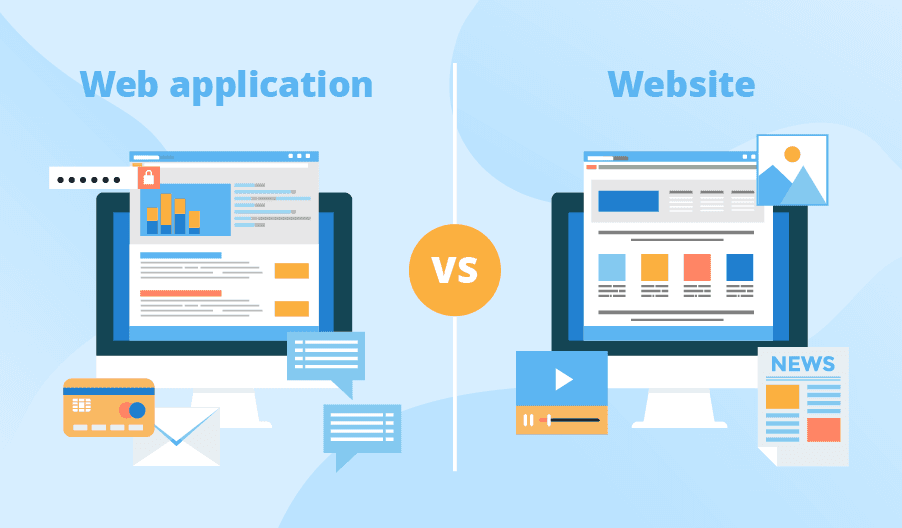
Strip away the jargon and the distinction is about what the visitor does. A website presents information for people to read, watch, and act on: who you are, what you offer, why it matters, how to get in touch. The visitor consumes and then decides. It is fundamentally a broadcast, however beautifully executed.
A web application is something people use rather than read. They log in, create things, manipulate data, and come back to state that persisted between visits. The defining feature is not technical sophistication but interaction: an app remembers you, holds your work, and changes based on what you do. If your idea is a tool, it is an app. If your idea is a message, it is a website.

Build Either One From the Same Conversation
Whether your idea is a site or an app, describe it to SnapBlock and let AI agents design, code, and deploy it from start to finish. Start free and find out what your idea actually needs.
Start Building Free → View Plans & Pricing →2. Why People Ask for Apps They Do Not Need
There is a status pull toward apps. An app sounds like a real product, a serious business, a thing with substance, while "just a website" sounds modest. That instinct is understandable and frequently expensive, because it leads people to commission complexity in pursuit of a feeling rather than a function.
The honest test is unsentimental. Ask what your users need to do that a well-made website cannot support. If the answer involves accounts, saved work, or data that belongs to each individual user, you need an app. If the answer is "nothing, really, but an app seems more legitimate," you have just saved yourself a great deal of money and months of time by noticing.
3. The Complexity You Are Signing Up For
Apps carry obligations websites do not. The moment users have accounts, you are responsible for their credentials and their data. The moment they save work, you are responsible for not losing it. Permissions, sessions, and the security around all of it become your problem, permanently, and none of that is visible in the exciting part of the idea.
None of this is an argument against building an app when you need one. It is an argument against building one casually. The complexity is justified by what it buys you, but only when you actually need what it buys. This is precisely why the sensible move is to determine the answer before committing rather than discovering it partway through.

Which One Does Your Idea Need?
| Question | You Need a Website | You Need a Web App |
|---|---|---|
| What do visitors do? | Read, browse, and decide whether to contact or buy from you. | Log in and actively work with data that is theirs. |
| Does it remember them? | No; each visit stands alone and the content is the same for everyone. | Yes; state persists between sessions and differs per user. |
| What are you taking on? | Keeping content current and the message clear. | Accounts, saved data, permissions, and the security around all of it. |
4. Most Real Products Are Both
The framing of website versus app is a little artificial, because most established products run both. There is a public site that explains the offer, builds trust, and ranks in search, and behind a login sits the application that customers actually use. These serve different audiences at different moments and are often best thought of as two projects rather than one.
Recognizing this dissolves a lot of the anxiety around the choice. You are rarely picking one forever; you are picking what to build first. And the sequence matters, because the site that explains your product is useful immediately while the app is only useful once you know people want it, which points fairly clearly at where to start.
5. Start Simple, and Keep the Door Open
When genuinely uncertain, the cheaper answer is usually the wiser one. A clear website that explains your idea and captures interest tells you whether anyone cares, and it does so in days rather than months. If nobody responds, you have learned something valuable at minimal cost. If they do, you build the app knowing it is wanted.
SnapBlock supports either path from the same conversation, with AI agents that design, code, and deploy from start to finish, and it exports clean HTML, CSS, React, or Next.js in one click. Going live is handled too, with built-in hosting, a secure SSL certificate, and a global CDN. Starting simple costs you nothing in optionality, which is exactly what makes it the safe move.
The Verdict: Let the User's Behavior Decide, Not the Job Title
Websites broadcast; apps get used. If your visitors need to log in, save work, and return to something that is theirs, build an app and accept the responsibilities that come with it. If they need to understand what you offer and decide, build a website and resist the pull toward complexity you do not need. When you cannot tell, build the simpler thing first with SnapBlock, put it in front of real people, and let their behavior settle the question far more reliably than any internal debate will.
Ready to build the thing your idea actually needs?
Website or app, just tell SnapBlock what you want to build and let AI agents design, code, and deploy it. From blocks to live, in one conversation.
Start Building in a Snap →